




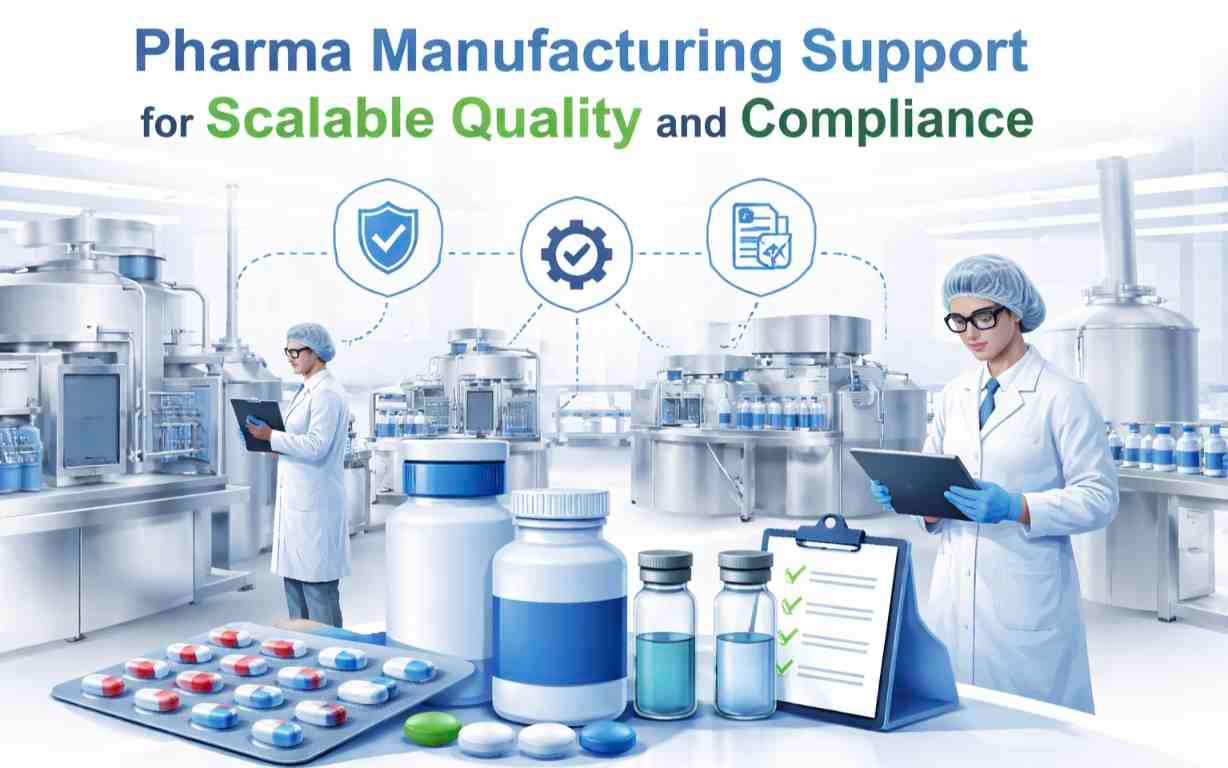
You face complex demands: regulatory compliance, uninterrupted production, and quality systems that must perform under scrutiny. Pharma manufacturing support brings the people, processes, and technical services that keep your facility audit-ready, efficient, and scalable — from raw-material sourcing and equipment service to manufacturing IT and site-level operations.
This article Pharma Manufacturing Supports walks through the core aspects that matter to your operation and highlights emerging solutions that reduce downtime and strengthen compliance. Expect practical guidance on partnering with support providers, optimizing workflows, and adopting new technologies so your manufacturing stays resilient and competitive.
Contents
Core Aspects of Pharma Manufacturing Support
You’ll get practical help across regulatory alignment, batch and process quality, operational efficiency, and site-to-site knowledge transfer. Each area targets actions you can take to reduce release delays, audit findings, and costly rework.
Regulatory Compliance Assistance
You receive support to prepare for and respond to agency expectations (FDA, EMA, WHO). That includes gap analyses against regulations like GMP and ICH guidelines, compilation of regulatory submissions (CTD modules, validation summaries), and mock inspections to test readiness.
Expect help drafting controlled documents: SOPs, change control records, deviation reports, and regulatory correspondence. Consultants often map your quality system to ICH Q10 and Q9 principles, highlighting where documented risk management or product quality reviews are missing.
Your team can get training tied to specific inspection observations and tailored corrective and preventive action (CAPA) plans. This reduces the chance of 483 observations and speeds approval timelines.
Quality Assurance Strategies
You’ll implement a structured quality system covering people, procedures, premises, equipment, and product release criteria. Key deliverables include product quality review schedules, batch release checklists, and sampling/testing plans aligned with pharmacopeial standards.
Focus areas are validation lifecycle activities (process, cleaning, analytical), stability program design, and release testing rationales. You’ll receive statistical tools for trend analysis, OOS investigations, and continued process verification to maintain control over critical quality attributes.
Auditable documentation practices get emphasis: version control, electronic records compliance (21 CFR Part 11 where applicable), and robust CAPA and change control processes that close the loop on quality events.
Process Optimization Services
You gain process mapping and capacity assessments to eliminate bottlenecks and increase yield. Workstreams include route-to-scale evaluation, unit operation optimization, and practical lean techniques such as 5S and value-stream mapping adapted to GMP constraints.
Engineered activities often involve DOE (design of experiments) to define optimal set points, scale-up risk registers, and control strategy recommendations tied to identified critical process parameters. That supports predictable scale-up from pilot to commercial batches.
You’ll also get throughput modeling, maintenance scheduling advice to reduce unplanned downtime, and cost-of-goods analyses so you can prioritize improvements that deliver measurable ROI.
Technology Transfer Guidance
You’ll receive a formal transfer package that includes process descriptions, validated methods, equipment qualifications, and acceptance criteria. The package supports knowledge transfer from R&D or a vendor to manufacturing, ensuring reproducible product quality at the receiving site.
Support covers gap assessments between sending and receiving sites, qualification protocols (IQ/OQ/PQ), and training for operators and QC staff. Risk-based transfer plans specify which experiments must be repeated and which can be relied upon from prior data.
Post-transfer, you’ll conduct comparability testing and a stability bridging program to confirm consistency. Clear governance—roles, timelines, and entry/exit criteria—keeps the transfer on schedule and reduces surprises during commercial launch.
Emerging Trends and Advanced Solutions
You will encounter three practical shifts shaping pharma manufacturing support: targeted digital tools that reduce batch variability, operational changes that cut emissions and waste, and supply-chain strategies that improve availability and compliance.
Digitalization and Automation
You should prioritize process analytical technology (PAT) and integrated MES/EMR systems to reduce human error and speed batch release. Implementing real-time sensors and AI-driven anomaly detection helps you catch deviations within minutes rather than hours, lowering batch failure risk.
Focus on closed-loop control for critical unit operations—fill/finish, lyophilization, and biologics upstream—so adjustments happen automatically based on sensor feedback. Use validated digital twins for scale-up modeling to predict scale-related quality changes before you commit costly runs.
Train operators on human–machine interfaces and maintain rigorous data integrity controls (audit trails, role-based access). This keeps you inspection-ready and shortens regulatory review cycles.
Sustainability Initiatives
You can reduce energy and solvent use by switching to continuous processing and single-use technologies where appropriate. Continuous flow reactors and single-use bioreactors often cut water and steam consumption and shorten clean-room occupancy.
Measure scope 1–3 emissions for your products and set reduction targets tied to process changes—like high-efficiency HVAC upgrades and heat-recovery systems. Implement solvent recycling and evaluate alternative excipients to lower lifecycle environmental impact.
Adopt greener utilities and validate process changes with environmental impact assessments. Document emissions reductions and waste diversion metrics to support regulatory filings and customer sustainability requests.
Supply Chain Optimization
You need multi-sourcing strategies and regional buffer stocks to mitigate supplier disruptions for active pharmaceutical ingredients (APIs) and critical excipients. Map your supplier criticality and maintain dual qualified suppliers for high-risk items.
Use demand-driven replenishment with advanced forecasting that combines sales, clinical demand, and safety-stock algorithms. Integrate serialization and track-and-trace systems to ensure product integrity across distributors and comply with global regulations.
Standardize supplier audits and digitalize CAPA tracking so quality events get resolved faster. That lowers lot release delays and reduces the likelihood of costly recalls.