





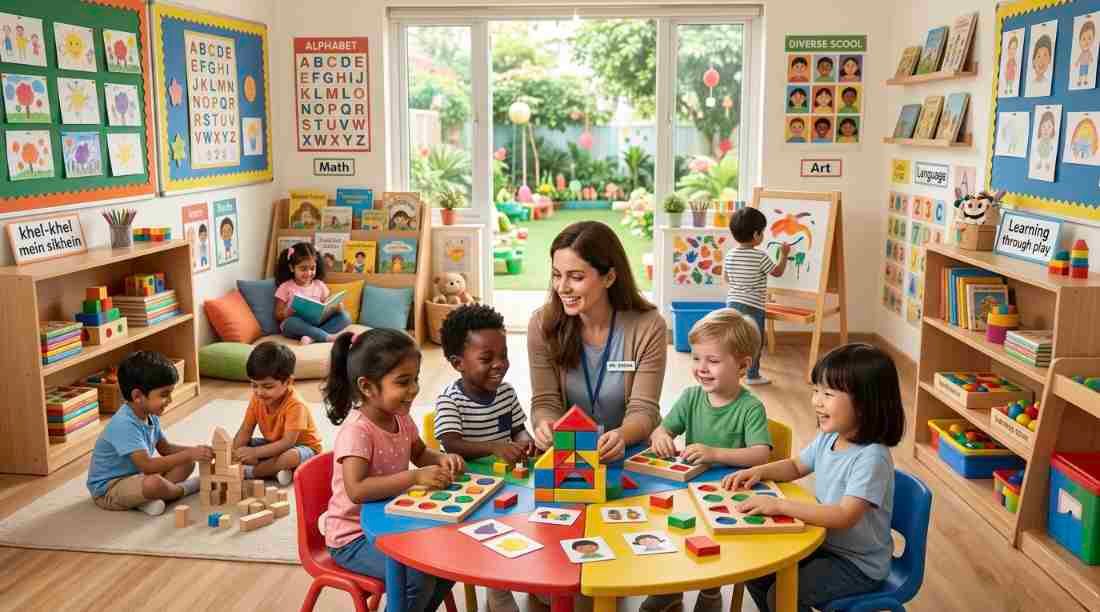
You want a nursery school that helps your child feel secure, explore confidently, and build early learning skills. A good nursery schools provide a safe, nurturing environment with trained staff, play-based learning, and opportunities for social and emotional development that set the foundation for lifelong learning.
This post will help you spot the key features that matter—staff qualifications, learning approach, outdoor space, and transition support—so you can compare options with confidence. Keep reading to learn how to match a school’s strengths to your child’s needs and priorities.
Key Features of Nursery Schools
Nursery schools focus on early learning, social skills, and consistent daily routines. They combine play-based activities, adult-guided instruction, and safe environments to prepare children for formal schooling.
Definition and Purpose
A nursery school serves children typically aged 3–4 with programs designed to develop social, emotional, cognitive, and physical skills. You will find short, structured days that balance play and teacher-led tasks to build routines like following instructions and sharing.
The purpose is practical: ease the transition to primary school and foster foundational readiness. Expect activities that teach basic number and letter recognition, turn-taking, self-care (toileting, handwashing), and language development through songs, stories, and conversation.
Parents rely on nursery schools for consistent monitoring of milestones and early identification of learning or developmental concerns. Staff document progress and communicate regularly so you can support learning at home.
Educational Approach
Most nursery schools use a play-based, child-centered curriculum paired with explicit teaching of early literacy and numeracy. You’ll see hands-on materials—blocks, sand, water, art supplies—used to teach counting, shapes, and fine motor skills.
Teachers scaffold learning: they observe interests, introduce small-group tasks, and extend vocabulary through targeted questions. Routine circle times and story sessions model listening and turn-taking while building phonological awareness and vocabulary.
Assessment tends to be formative and observational rather than formal testing. Staff use checklists, learning journals, and portfolios to track progress and plan next steps, sharing practical strategies you can use at home.
Age Groups Served
Nursery programs most commonly serve 3- and 4-year-olds, though some settings include younger toddlers (2–3) and older pre-kindergarten children (4–5). You should check enrollment policies because age ranges affect group size and staff qualifications.
Class composition often groups children by developmental stage rather than strict age. That arrangement helps teachers target activities to attention spans and skill levels, for example, simpler sensory play for two-year-olds and more complex role-play for four-year-olds.
Ratios vary: expect higher adult-to-child ratios for younger groups (e.g., 1:4 or 1:6) and slightly lower supervision needs for older pre-schoolers (e.g., 1:8). Those ratios influence safety, individualized attention, and the pace of learning.
Learning Environment
Nursery classrooms are arranged into clearly defined learning zones: reading, art, block play, sand/water, and quiet areas. You can expect low shelves, child-sized furniture, and accessible materials to encourage independence and exploration.
Indoor and outdoor play spaces are essential. Outdoor areas provide gross-motor challenges and nature experiences that support physical development and risk assessment skills under trained supervision.
Health and safety are prioritized through secure drop-off systems, sanitized materials, and trained staff in first aid. The environment also emphasizes predictable schedules—welcome, free play, snack, group time—to reduce anxiety and help you know what to expect each day.
Choosing the Right Nursery School
Decide on a nursery that meets safety and regulatory standards, offers a balanced curriculum, employs qualified staff, and invites regular parental involvement. Focus on measurable indicators—inspection reports, daily schedules, staff credentials, and communication routines—when comparing options.
Accreditation and Standards
Check the latest inspection report from the appropriate regulator (e.g., Ofsted in England or equivalent locally). Look for overall ratings, specific notes on safeguarding, staff-to-child ratios, and recommendations for improvement.
Ask the nursery to show evidence of registration, insurance, and public liability coverage. Confirm their medication, allergy, and emergency procedures in writing.
Use a simple checklist during visits:
- Registration number and inspection rating
- Staff-to-child ratios for your child’s age group
- Written safeguarding and health policies
- Fire drill and first-aid records
Request clarification on any critical findings in reports. If a nursery has recent minor issues, ask what changes they implemented and how they monitor continued compliance.
Curriculum and Activities
Ask for a weekly timetable showing daily routines: free play, focused group time, outdoor play, meals, and naps. Look for a balance between child-led play and adult-led learning that targets language, motor skills, and social development.
Verify how the nursery assesses progress—does it use observation notes, learning journals, or a digital app you can access?
Check specific offerings:
- Phonics or language activities and frequency
- Outdoor play time per day
- Creative sessions (art, music) and sensory play
- Transition support toward school skills (toileting, listening, turn-taking)
Observe a session if possible. Note whether activities are adapted to different developmental levels and whether staff set clear, achievable objectives for your child.
Teacher Qualifications
Request the names, roles, and qualifications of staff who will work with your child. Verify current DBS/CRB checks and first-aid certification for staff on duty.
Ask how long staff have worked at the nursery and their turnover rate; lower turnover generally supports stronger attachments and consistency.
Key points to confirm:
- Minimum qualification levels for lead staff (e.g., Level 3 or equivalent)
- Ongoing professional development plans and recent training topics
- Ratio of qualified to unqualified staff during your child’s hours
Discuss how the nursery supports staff mentorship and performance review. A clear staff development plan indicates investment in quality and continuity for your child.
Parental Involvement
Find out how the nursery communicates daily and over longer term—options include face-to-face handovers, apps with photos and updates, weekly newsletters, or scheduled meetings. Choose a nursery whose communication style matches your needs.
Ask how the nursery involves parents in curriculum planning, events, and feedback loops.
Look for concrete participation channels:
- Regular progress meetings and written reports
- Parent workshops or volunteer opportunities
- A documented complaints and feedback process with response times
Confirm how the nursery handles concerns and shares incidents. Clear, timely communication and structured opportunities for input help you stay informed and involved in your child’s development.