




If you’re wondering whether an ADHD Assessment Online can give you a clear starting point, it can—many validated self-report tools and telehealth evaluations help identify symptoms and point toward next steps. An online assessment can quickly highlight whether your patterns of attention, impulsivity, or time blindness match common ADHD profiles and whether you should pursue a full diagnostic evaluation.
You’ll learn how remote screenings work, what validated questionnaires look for, and when an in-person diagnostic is still necessary. This article will also weigh the practical benefits—speed, privacy, and accessibility—against limitations like the need for clinical follow-up and careful interpretation of results.
Contents
Understanding Online ADHD Assessments
Online ADHD assessments let you gather symptom data, medical history, and functional impact through digital tools and clinician interviews. They can be faster and more convenient than in-person visits, but the format affects what information clinicians can observe directly.
What Is an Online ADHD Assessment
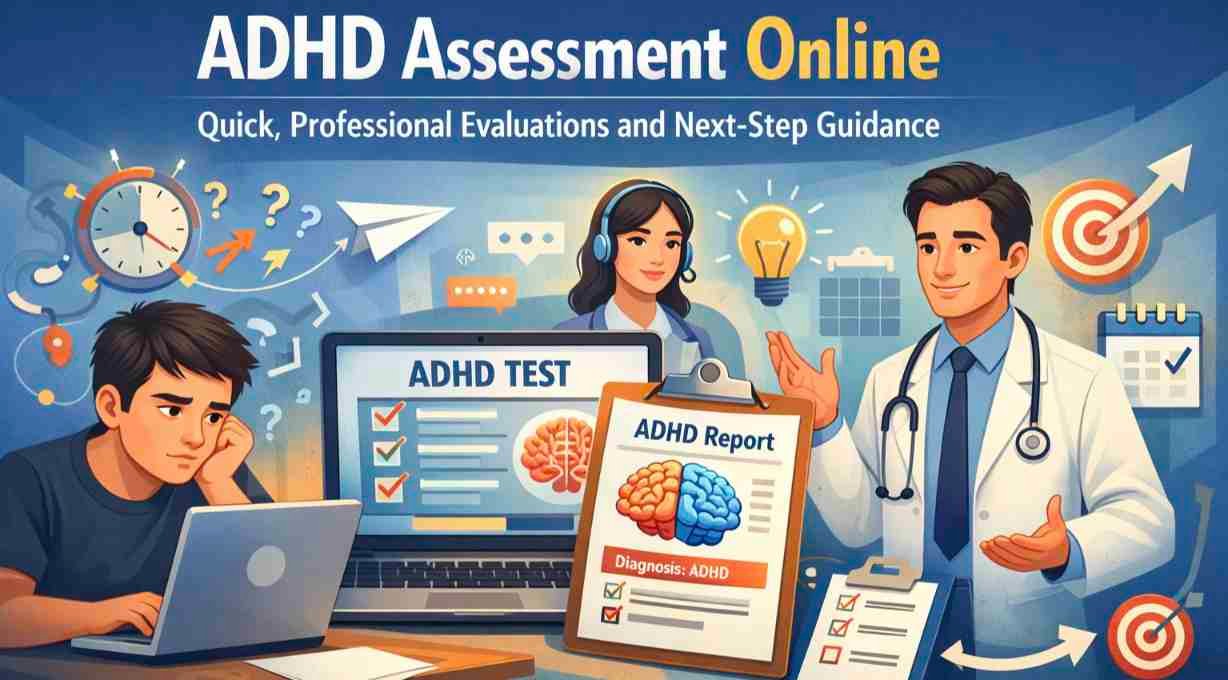
An online ADHD assessment uses questionnaires, structured interviews, and sometimes cognitive tasks delivered by websites or telehealth platforms. You typically complete standardized rating scales about attention, hyperactivity, and impulsivity, plus forms about childhood behavior, current functioning, sleep, medication, and co-occurring conditions.
A licensed clinician will often review your responses and conduct a video interview to probe symptom onset, duration, and impact across work, school, and home. Expect requests for collateral information (reports from partners, parents, or employers) and medical/psychiatric history to rule out other causes.
How Online Assessments Compare to In-Person Evaluations
Online assessments match in-person visits on symptom questionnaires and structured interviews when clinicians follow evidence-based protocols. You gain convenience, geographic access, and faster scheduling, which can speed diagnosis and treatment planning.
However, clinicians may miss subtle nonverbal cues or real-time behavioral sampling that occur during face-to-face exams. In-person evaluations may include physical exams, on-site neuropsychological testing, or immediate collateral interviews, which can be necessary when presentations are complex or when differential diagnosis is unclear.
Types of ADHD Tests Available Online
You will encounter three common formats: self-report questionnaires, clinician-led telehealth evaluations, and computerized attention/EF tasks. Self-report tools (e.g., adult ADHD rating scales) screen symptoms quickly but cannot confirm diagnosis alone.
Telehealth evaluations combine your questionnaire data with a clinical interview and collateral information; they provide the most diagnostically reliable remote option. Computerized tasks (continuous performance tests, working memory tasks) offer objective measures of attention and processing but should be interpreted alongside clinical history and rating scales.
Benefits and Considerations of Remote ADHD Evaluation
Remote ADHD evaluations can save you time, widen access to specialists, and use the same diagnostic tools as in-person assessments when done properly. They also require careful choice of provider, attention to privacy, and sometimes additional in-person testing.
Advantages of Choosing an Online ADHD Assessment
Online assessments let you book and complete interviews from home, which reduces travel time and scheduling conflicts. Many reputable services use structured diagnostic interviews, standardized rating scales (like the ASRS), and video-based clinical observation, which mirror in-person methods.
You can access clinicians who specialize in adult or pediatric ADHD even if local services are limited. That expands treatment options and shortens wait times. Some platforms also offer integrated follow-up care—medication management, therapy referrals, and digital symptom tracking—so you can move from evaluation to treatment more quickly.
Cost can be lower or more transparent than traditional clinics, and digital tools simplify sharing assessment forms with family members, schools, or other clinicians. Still, quality varies, so check licensing, evidence-based tools used, and whether the provider offers a comprehensive report you can use with other healthcare professionals.
Limitations and Potential Drawbacks
Remote assessments may miss contextual cues you’d get in person, such as subtle motor behaviors or clinic-based cognitive testing results. That can reduce diagnostic confidence in complex cases, especially when co-occurring conditions (anxiety, learning disorders, sleep problems) complicate the picture.
Not all platforms perform formal neuropsychological testing or objective attention testing that requires controlled environments. You might need in-person follow-up for standardized cognitive tests, medical exams, or when medication decisions require close monitoring. Technical issues, inconsistent internet quality, or lack of private space at home can also disrupt interviews and affect data quality.
Insurance coverage and prescription regulations vary by region, so verify whether telehealth visits will be reimbursed and whether remote clinicians can legally prescribe stimulant medications where you live.
Ensuring Accuracy and Credibility
Choose a provider who uses validated instruments (structured interviews, standardized rating scales) and who is licensed in your state or country. Look for clinicians with experience in ADHD across the lifespan and transparent protocols for gathering collateral information from family, teachers, or past records.
Confirm the assessment includes a documented clinical formulation and a written report with diagnostic criteria, differential diagnoses considered, and clear treatment recommendations. Ask whether objective tests (continuous performance tests, cognitive batteries) are available when needed and whether the service offers secure, HIPAA/GDPR-compliant video and record storage.
Check reviews and professional affiliations, and verify how the provider handles follow-up care, prescriptions, and coordination with local healthcare providers.