





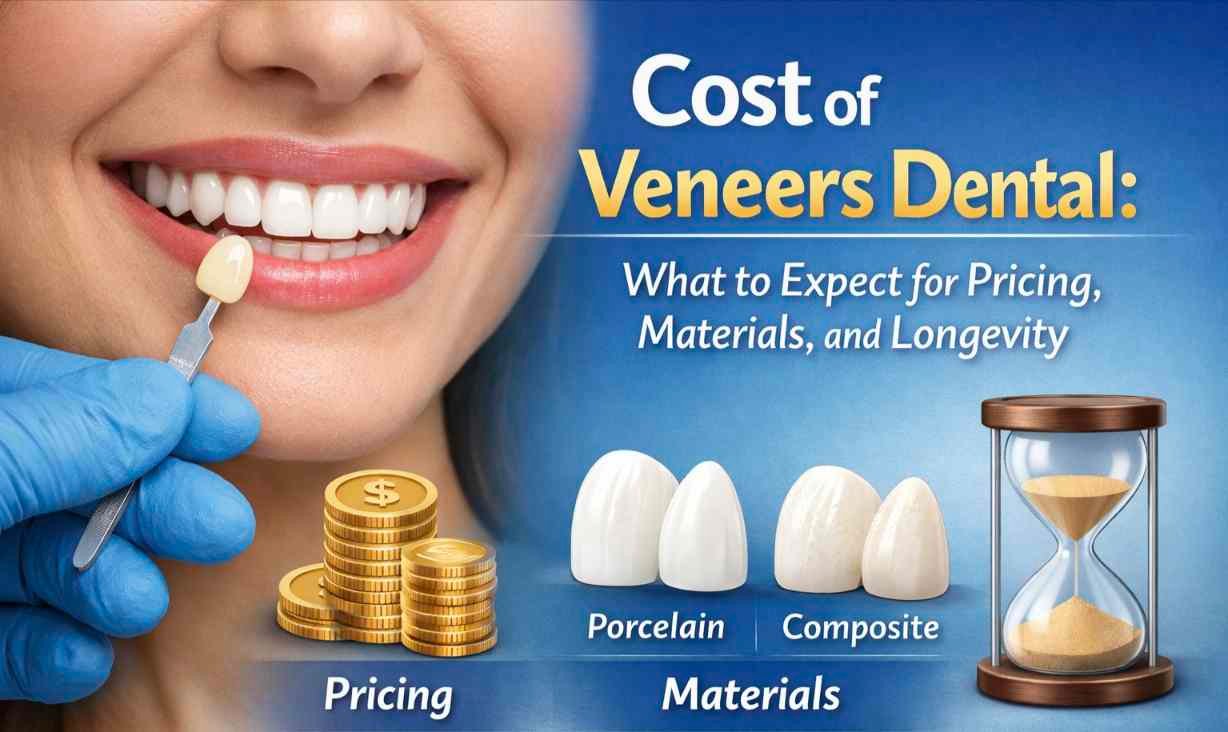
Veneers can transform your smile, but the price varies widely based on material, location, and any prep work you need. Expect most veneers in Canada to range roughly from a few hundred to a couple thousand dollars per tooth, with porcelain and zirconia at the higher end and composite at the lower end.
This article Cost of Veneers Dental breaks down what drives those costs, how different materials compare, and what additional treatments or lab fees might push the final number higher. You’ll also find practical guidance on payment options and how to weigh upfront expense against long-term value so you can decide if veneers make financial sense for your goals.
Contents
Understanding the Cost of Veneers Dental
Veneer pricing depends mainly on the material chosen, how many teeth you treat, and any preparatory or follow-up dental work required. Expect wide regional and provider variation; plan for diagnostics, lab work, and possible temporary or revision visits when budgeting.
Average Price Range
Porcelain veneers typically range from about $800 to $2,500 per tooth depending on lab quality and dentist experience. Composite veneers are generally less expensive, roughly $250 to $1,500 per tooth, but may need replacement sooner.
If you replace an entire smile (8–20 teeth), costs commonly reach $4,800 to $50,000 total; the upper end reflects premium materials, full-arch treatment, or top-tier specialists. Ask your dentist for an itemized estimate that lists consultation, imaging, tooth preparation, lab fees, temporary veneers, and follow-up visits.
Insurance rarely covers veneers for purely cosmetic reasons. If veneers correct functional issues (like severe chips affecting bite), partial coverage might apply—verify with your insurer and get preauthorization.
Types of Veneers and Their Costs
Porcelain veneers: durable, stain-resistant, and closest to natural enamel. Expect higher lab and clinician fees due to custom crafting and multiple appointments. They generally last 10–15+ years with proper care.
Composite veneers: bonded directly to the tooth in one visit or layered by a lab. They cost less up-front and can be repaired in-office but typically last 5–7 years and stain more easily.
No-prep/minimally invasive veneers (e.g., Lumineers): preserve tooth structure and may reduce sensitivity. Prices overlap with porcelain but can vary based on brand and technique. Specialty ceramics (e.max, zirconia) offer increased strength and can sit at the higher end of porcelain pricing.
Primary Factors Influencing Cost
Material choice drives the baseline cost: high-strength ceramics and custom lab work increase price. Provider skill matters—experienced cosmetic dentists and prosthodontists usually charge more for predictable outcomes.
Geography affects fees: urban and high-cost-of-living areas raise lab and chairtime costs. Complexity adds fees: extensive tooth preparation, gum treatment, root canal therapy, or orthodontic alignment before veneering will increase the total.
Lab quality and warranty services change long-term value; lower initial cost may mean shorter lifespan or more repairs. Ask about financing, payment plans, and whether follow-up adjustments or replacements are included in the quoted price.
Paying for Veneers and Long-Term Value
You will face upfront costs, possible insurance limits, and ongoing maintenance. Plan for financing options, expected lifespan of different materials, and routine costs like checkups and occasional replacements.
Insurance and Financing Options
Insurance rarely covers purely cosmetic veneers, but partial coverage can occur if veneers treat trauma or disease. Ask your insurer for a written pre-authorization that specifies covered procedure codes and any annual maximums before you proceed.
Use these common payment routes:
- Cash or debit: avoids interest and often yields a modest discount.
- Dental credit plans (e.g., CareCredit): offer deferred interest or fixed monthly payments; compare APR and terms.
- In-office financing: many practices let you pay in installments; get the full repayment schedule in writing.
- Third-party medical loans: can cover higher-cost cases but may carry higher rates.
Confirm whether your plan allows submission of claims for laboratory or preparatory work. Track receipts and codes to maximize any partial reimbursement.
Longevity and Maintenance Expenses
Veneer lifespan depends on material: composite veneers often last 5–7 years, porcelain or zirconia usually last 10–15+ years with proper care. Expect replacement eventually; factor replacement cost into your long-term budget.
Routine costs to plan for:
- Biannual dental exams and cleanings ($100–$300 per visit depending on location).
- Occasional repairs for chips or debonding (minor repairs $50–$300; full replacement per tooth varies widely).
- Nightguard if you grind teeth (one-time $100–$600).
- Whitening for adjacent natural teeth to keep color match, if needed.
Keep records of work and materials used; high-quality lab-made porcelain often reduces long-term replacement frequency and overall cost per year.